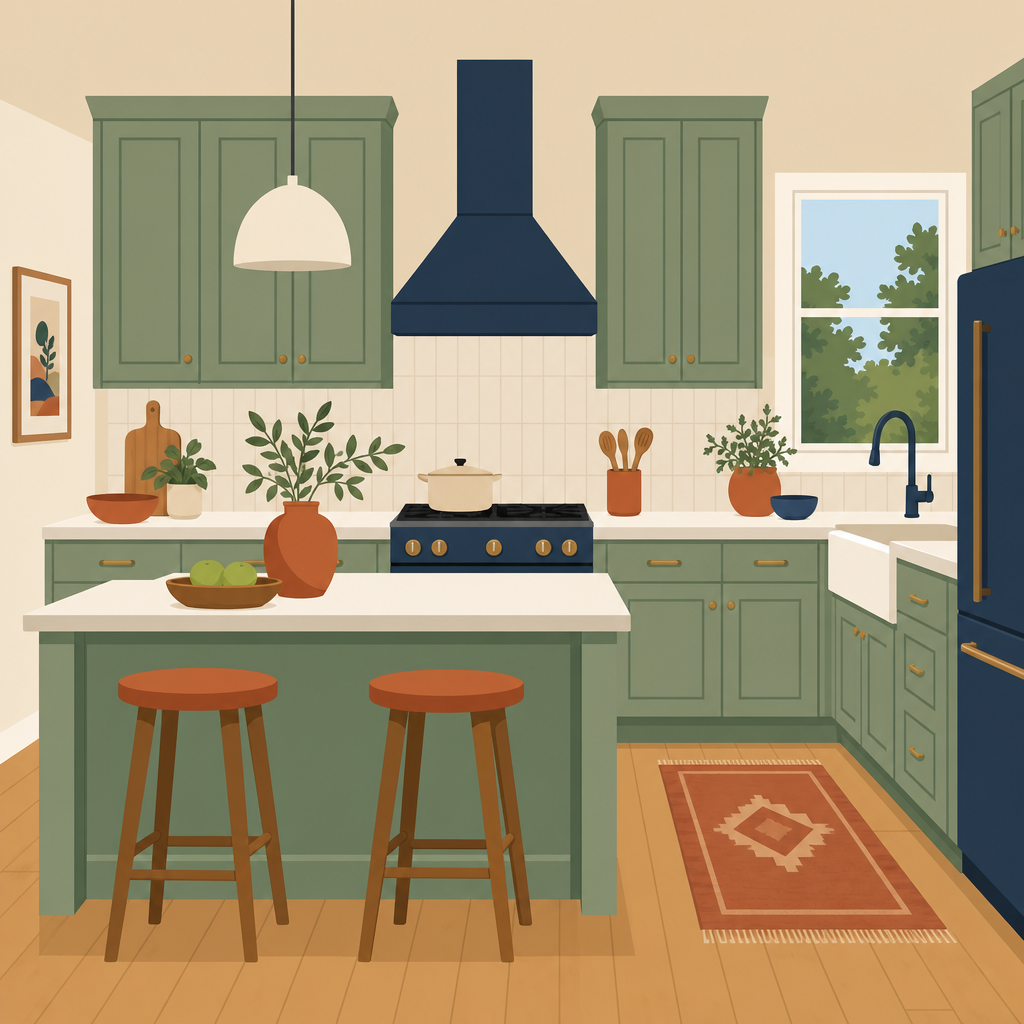
What a Room Collects

A photograph, a link, a paint chip and a sentence typed at eleven at night are four shapes of one act: somebody saw something and wanted the room to remember it. They are one row in one table, and they belong to the room rather than to a tab of their own.

A · What the kitchen is carrying
Inside the space, under its colors. Four kinds of saved thing, one card shape. The kind is carried by the chip, never by the card.
B · Putting something in
Three doors, none preselected, because the room already knows which room it is. A pasted link resolves to a card before it is saved.
Kitchen

Keep something

It goes to the kitchen because that's where you are. You can move it later, and you won't have to name it.

Take a photo
Paste a link
Type a note
Pasted just now
Deep single-bowl sinks, the undermount ones The page it came from, kept with it
Give it a room Kitchen
Say why, if you want Optional. Nothing needs it.
Keep it
Not this one

A file isn't one of the three doors yet

A photo and a link can belong to the kitchen today. A PDF can't: project_documents has no zone_id, and the type list is seven plan-drawing kinds. That's the column mockup 27 needs for a permit.

C · Photographing one
The first door, and the only one where what comes back has no words on it at all. A link brings a title and a source; a note is already a sentence. A photograph arrives blank, and the screen has to be honest about how little it knows.
Kitchen

Just taken

It goes to the kitchen because that's where you are. Everything under it is optional and it keeps perfectly well without any of it.

Give it a room Kitchen
Call it something Optional. It keeps as a photograph otherwise.
Keep it
Take another
How it sits on the board
A photograph You · just now · Kitchen

Named a photograph because that is all anybody knows about it, and the picture is the handle. A link would have brought its own title and a note is its own first line; this one has neither and is not pretending to.

Nothing reads the picture

A photographed paint chip does not become a color, and a photographed tag does not become a price. Mockup 17 does that, deliberately, on the option intake. But that is a decision being priced, and this is a room being reminded. Doing it here would turn saving a thing into starting a job.

D · Typing one
The third door, and the one that needs the least. There is no link to resolve and no picture to wait for — a sentence is already the whole thing, so the screen's only job is to not ask for more.
Kitchen

Type a note

It goes to the kitchen because that's where you are. Nothing else is needed, and nothing will chase you about it.

The bin has to be next to the sink, not under the island. Six years of carrying peelings across the room is most of the reason we are doing this at all.
Give it a room Kitchen
Call it something Optional. The first line does it otherwise.
Keep it
Not this one
How it sits on the board
“The bin has to be next to the sink…” You · just now · Kitchen

The same card a photograph and a link get, with the lines glyph where their picture goes. A note is not a lesser kind of thing to have saved.

A note is not a task. It never appears in Now, nothing counts it, and it will still be sitting here in a year if nobody does anything with it. That is the whole point of somewhere to put a thought down.

E · The one that has no room yet
Saved from outside the app, before there was a room to put it in. Not an inbox, not a second feature — the same row with nothing in zone_id.
F · Everything, across the house
A lens over the same rows, not a seventh tab. Mockup 21 settled this shape: the house has six tabs and any number of ways to look through them.
G · Room actions
The visible three-dot button at the upper right opens the only room-management sheet. Search does not belong on this screen; these two actions do.
Room actions
Rename room
Remove room
H · Naming the room
Renaming changes the room's label, not the things in it. It is a short edit rather than a general settings screen.
I · Removing the room
A room is re-addable, so there is no typing ritual. The screen states the fixed result before the one destructive action; it never asks the person to choose a disposition.

What this page decides, and what it asks for